Summary
Skimming is a thin finish coat over a sound surface. Plastering is the broader process, which can include backing coats that rebuild or straighten a wall first. If the wall is sound and reasonably flat, a skim is usually enough; if it is hollow, crumbling or badly out of line, it needs repair or re-plastering.
What skimming is
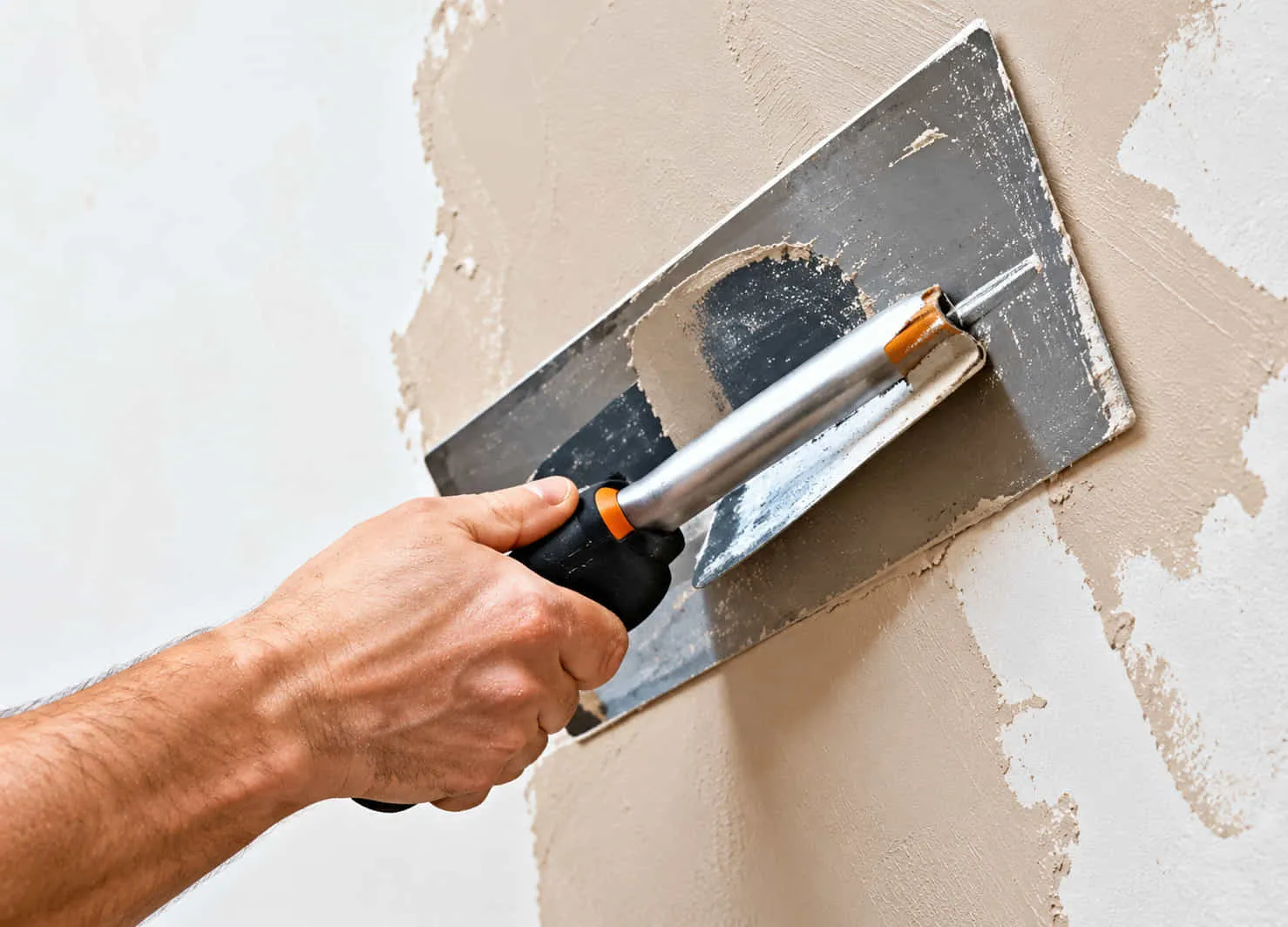
A skim coat is a thin layer of finishing plaster, usually 2–3 mm, applied in two passes and trowelled smooth. It is used over new plasterboard and over existing plaster that is well bonded and reasonably flat.
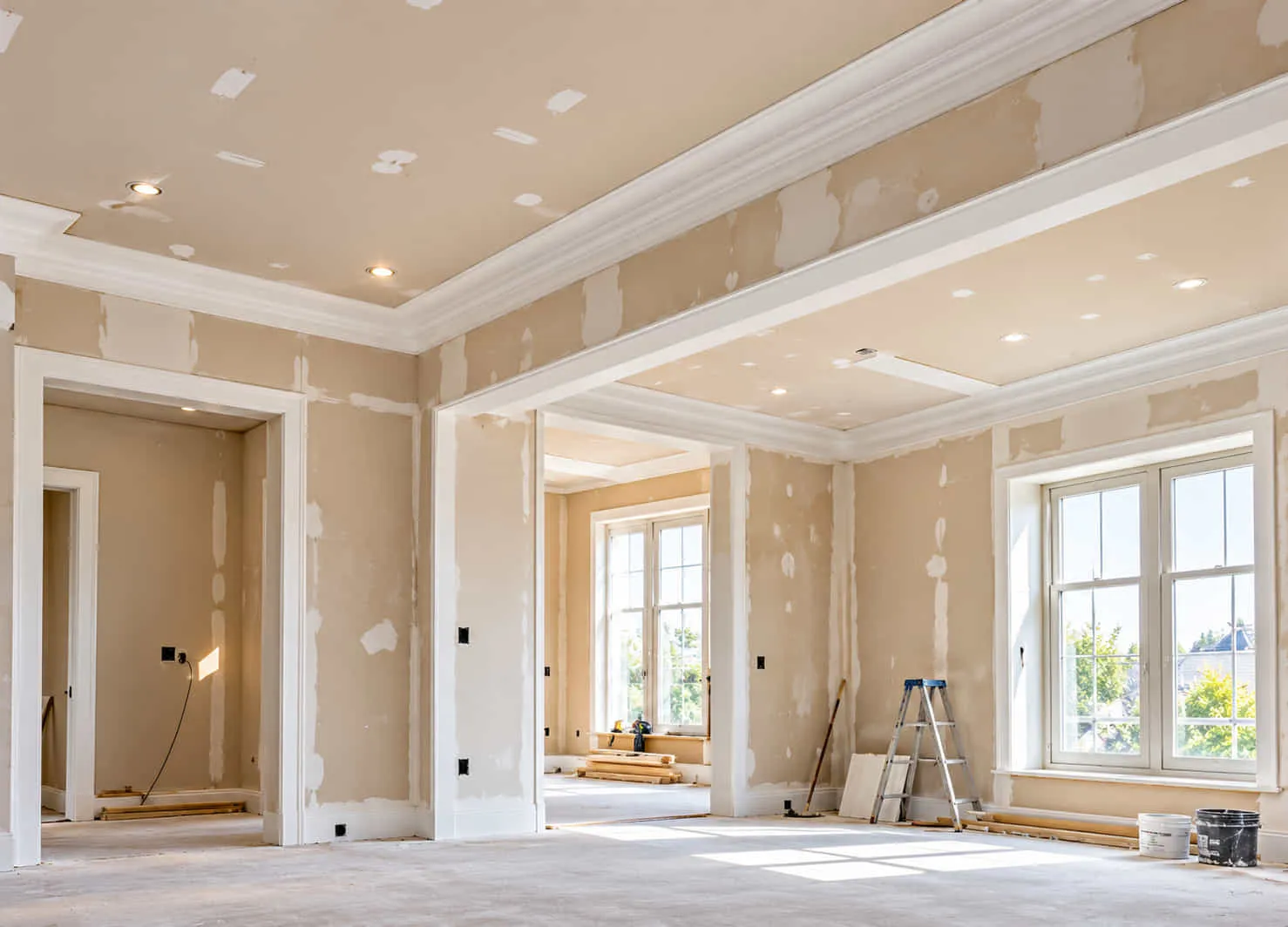
Skimming hides board joints, old patch repairs and minor surface blemishes, and gives a consistent surface for paint.
What full plastering involves
Plastering includes everything needed to form a finished wall: removing failed material, applying backing coats to build out or straighten the wall, fixing beads to corners and openings, and then applying the finish coat.
Backing coats can be 10 mm or more thick, and take longer to dry than a skim.
How to tell which your wall needs
- Tap the wall: a hollow sound usually means plaster has lost its bond and needs cutting out.
- Look along the wall with a torch: deep undulations will show through a skim.
- Check for crumbling, powdery or salt-stained plaster, which points to damp or failed material.
- Look at the age of the building: pre-1920 solid walls may need lime rather than gypsum.
Cost and disruption
A skim is quicker, uses less material and dries faster, so it is usually the less expensive option. Full re-plastering involves more labour, waste removal and drying time. When we quote, we explain which areas can be skimmed and which need more, so you are not paying for more work than is needed.