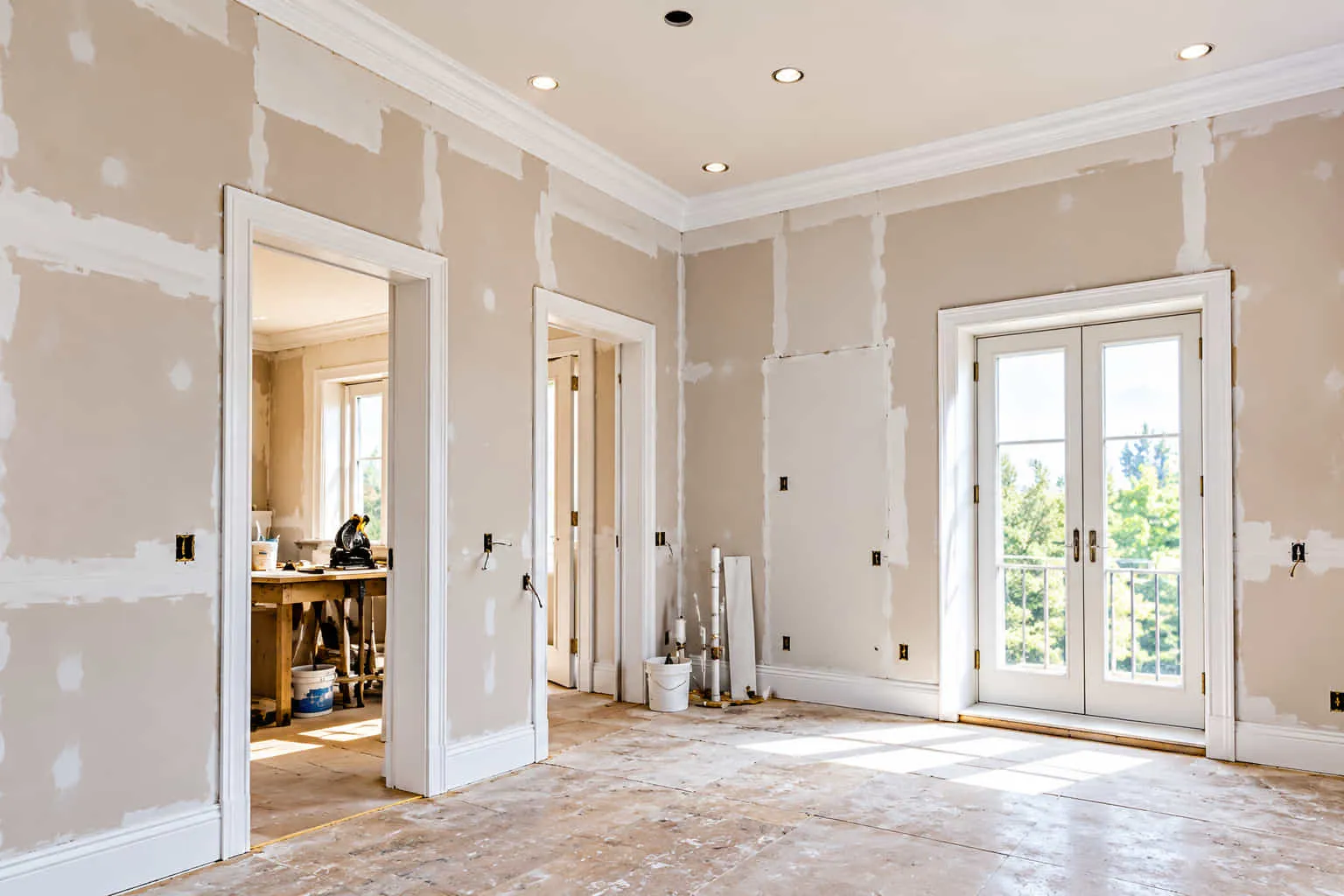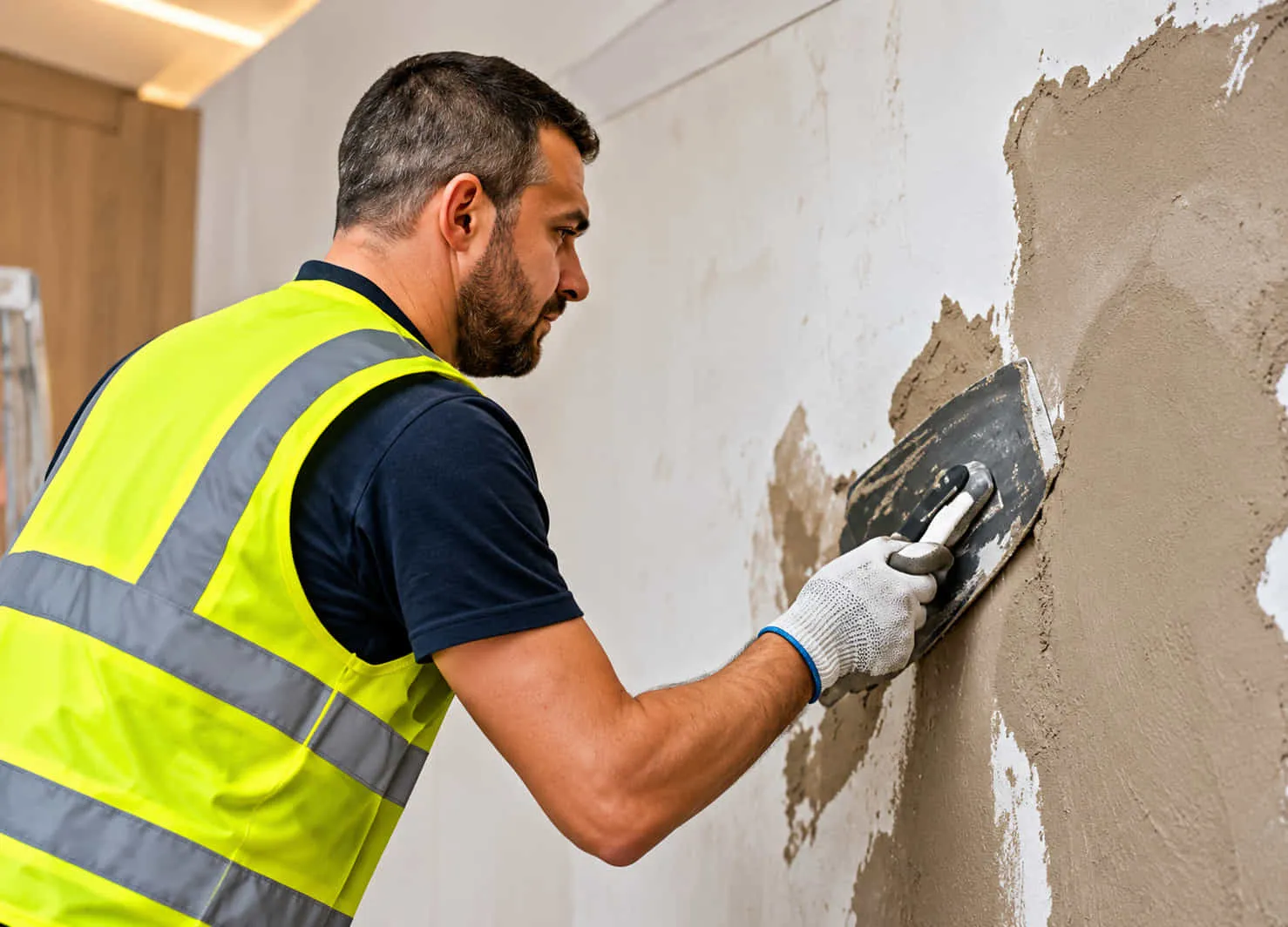
Good preparation is the quickest way to a better finish and a smoother day for everyone. Most of it is simple, and doing it before we arrive means more of the day goes on the plastering itself.
Clear the room
Remove as much furniture as you can. Anything that has to stay should be moved to the middle of the room so the plasterers can reach every wall comfortably, usually with about a metre of clear space around the edges.
- Take down curtains, blinds, pictures, shelves and wall-mounted TVs.
- Remove or bag light fittings where it is safe to do so.
- Empty fitted cupboards on the walls being plastered.
Electrics, sockets and switches
Sockets and switches are normally loosened or removed so the plaster can finish neatly behind them. If you are planning new sockets, lights or cabling, have the electrician do the first fix before plastering — chasing new cables into a fresh wall means patching it later.
Protect what stays
We sheet floors and cover fixed items, but it helps to tell us about anything delicate in advance: original floorboards, new kitchens, stair runners or period features such as cornicing and ceiling roses.
Access, water and parking
Plastering needs clean water and a route in and out for materials and waste. Let us know about parking restrictions, permits or shared entrances, particularly in central London, so we can plan deliveries.
Tip: if the room has damp patches, mould or loose, hollow-sounding plaster, mention it when you request your quote. These change the scope of the job and are much easier to price before the start date.
A quick checklist
- Furniture out or centred
- Wall fittings removed
- First-fix electrics finished
- Delicate surfaces flagged
- Water, access and parking arranged